Which Porcelain Enamel Frit Is Recommended for Reducing Thermal Shock Cracking Defects?
Introduction
Manufacturers trying to reduce thermal shock cracking should generally select a porcelain enamel frit specifically formulated for thermal-shock resistance, with controlled thermal expansion matched to the substrate and production process. The objective is not simply to choose the frit with the lowest expansion. The frit must develop a stable enamel layer that can tolerate repeated heating and cooling without creating excessive tensile stress, poor adhesion, crazing, or edge chipping.
The most suitable frit depends on the substrate, coating thickness, firing temperature, application method, and service conditions. A frit that performs well on cookware may not be suitable for a heat exchanger, gas stove grate, architectural panel, or glass-fused-to-steel tank. For this reason, manufacturers should evaluate the complete enamel system rather than selecting a frit based on one property alone.
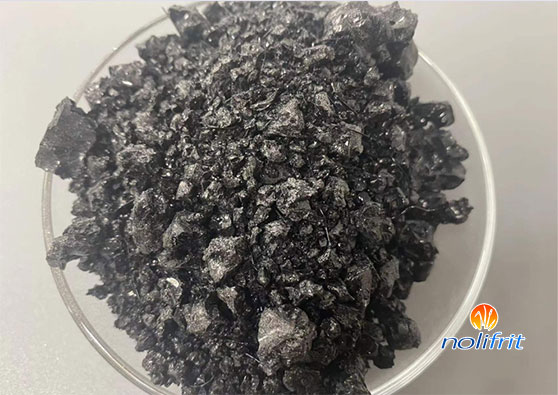
What Type of Enamel Frit Helps Reduce Thermal Shock Cracking?
Recommended choice: a substrate-matched, thermal-shock-resistant frit
The recommended starting point is a thermal-shock-resistant porcelain enamel frit with a controlled coefficient of thermal expansion and good adhesion to the substrate.
This type of frit is designed to help control stress generated when the coated component experiences rapid or repeated temperature changes. Important characteristics may include:
- Thermal expansion compatible with the base metal or other substrate
- Good resistance to tensile cracking during cooling
- Adequate elastic response to repeated thermal cycling
- Strong adhesion after firing
- A firing range compatible with the production line
- Stable glass formation and surface fusion
- Compatibility with the selected enamel application method
A suitable frit should create a coating with an appropriate stress balance. If the expansion behavior of the enamel and substrate is poorly matched, thermal cycling can produce cracks, delamination, edge failure, or other coating defects.
Why a “low-expansion” frit is not always the best answer
A common mistake is to assume that the frit with the lowest thermal expansion will automatically provide the best thermal shock performance. In practice, the final result depends on the relationship between the enamel layer and the substrate.
A frit with expansion that is too different from the substrate may create residual stress after firing. The problem can become more serious when the part is heated unevenly, cooled rapidly, or exposed to repeated temperature changes.
Therefore, the better selection principle is:
Choose a frit with thermal expansion and mechanical behavior appropriately matched to the substrate and thermal cycle, rather than choosing a frit based only on minimum expansion.
How Thermal Expansion Mismatch Causes Cracking
Thermal stress during heating and cooling
Porcelain enamel and the substrate expand when heated and contract when cooled. If they do not respond at compatible rates, stress develops at the enamel-substrate interface and within the glassy coating.
Thermal shock cracking is more likely when several conditions occur together:
- The component is exposed to a rapid temperature change
- Heating is uneven across the part
- The enamel layer is excessively thick
- The substrate has sharp corners, edges, or local deformation
- The frit and substrate have poorly matched expansion behavior
- The firing schedule does not produce a fully fused coating
- The surface contains weak adhesion areas or contamination
- The part is subjected to repeated thermal cycling
The frit is therefore important, but it is only one part of the defect-control strategy.
Typical cracking-related defect patterns
The actual cause should be confirmed through process investigation rather than inferred from appearance alone.
Which Frit Properties Should Manufacturers Compare?
1. Thermal expansion compatibility
Thermal expansion compatibility is usually the first property to review. The frit should be evaluated together with the intended substrate, such as steel, cast iron, or another coated material.
Manufacturers should ask the frit supplier for technical guidance on:
- Expansion behavior of the fired enamel
- Recommended substrate types
- Suitable coating thickness range
- Expected performance under thermal cycling
- Compatibility with ground coat, cover coat, or direct-on enamel systems
The important question is not whether the frit has a high or low expansion in isolation. The important question is whether its expansion behavior produces a stable stress relationship with the finished part.
2. Adhesion and interface strength
Thermal shock places stress on the enamel-substrate interface. A frit with good adhesion can help the coating remain attached as the part expands and contracts.
However, adhesion also depends on manufacturing conditions, including:
- Surface cleaning and degreasing
- Pickling or other surface treatment
- Steel composition and surface condition
- Application uniformity
- Firing temperature and holding time
- Coating thickness
- Furnace atmosphere and temperature distribution
A thermal-shock-resistant frit cannot compensate for oil, scale, rust, or other contamination on the substrate.
3. Firing compatibility
The frit should mature within a firing range that is realistic for the manufacturer’s equipment. If the enamel is under-fired, the coating may remain porous, weak, or insufficiently fused. If it is over-fired, surface appearance, color, adhesion, or dimensional stability may be affected.
A suitable frit should be evaluated against the actual production profile rather than only the nominal furnace setting. Important variables include:
- Heating rate
- Peak part temperature
- Holding time
- Furnace uniformity
- Part loading arrangement
- Cooling rate
- Actual thermal mass of the component
4. Coating flexibility and stress tolerance
Thermal shock resistance is related to the ability of the fired enamel layer to tolerate stress without cracking. The frit should be considered alongside coating thickness and the mechanical design of the part.
In some applications, a slightly more compliant enamel layer may perform better than a highly rigid layer, provided that it still meets the required hardness, chemical resistance, appearance, and service-temperature requirements. This balance must be established through application testing.
How Should the Frit Be Selected for Different Applications?
Enamel cookware and kitchenware
Cookware commonly experiences rapid temperature changes, localized burner heating, washing, and repeated thermal cycling. Manufacturers should focus on a frit system that provides:
- Good thermal shock resistance
- Reliable adhesion to the selected steel or cast iron substrate
- Uniform coverage on curved surfaces
- Stable appearance after repeated heating
- Compatibility with the selected ground coat and cover coat
Coating thickness and edge design are especially important because cracks often begin at areas with local stress concentration.
Gas stove grates and burner components
Gas stove grates are exposed to localized high heat, flame contact, thermal gradients, and mechanical handling. In this application, the frit should be evaluated for thermal cycling, adhesion, surface durability, and resistance to localized overheating.
A frit suitable for a broad flat panel may not perform equally well on a complex grate with ribs, corners, and different section thicknesses.
Oven and appliance panels
Oven panels and appliance components may undergo repeated heating and cooling but often require a smooth, decorative surface. Manufacturers should evaluate the frit for thermal stability, appearance retention, surface fusion, and compatibility with the panel’s forming and firing process.
The heating pattern of the finished appliance should be considered, especially when some areas of the panel heat faster than others.
Heat exchangers and industrial equipment
Heat exchangers, reactors, and other industrial enamel components may combine thermal cycling with chemical exposure, pressure, mechanical vibration, or large component dimensions.
For these applications, thermal shock resistance must be evaluated together with:
- Chemical resistance
- Coverage of complex geometries
- Resistance to localized temperature gradients
- Adhesion after repeated service cycles
- Repair or rework requirements
- Long-term coating integrity
The most appropriate frit is therefore application-specific and may require customized formulation development.
Glass-fused-to-steel tanks and architectural panels
Large panels and tank components can experience temperature differences across wide surfaces during firing, transportation, installation, or service. Uniform application, controlled firing, panel flatness, and edge protection become important factors.
A frit selected for these applications should be assessed in the full glass-fused-to-steel or architectural enamel process. Thermal shock performance should not be judged only from a small laboratory sample if the production part has substantially different dimensions and thermal mass.
What Manufacturing Changes Can Reduce Cracking Besides Changing the Frit?
Changing the frit may be necessary, but manufacturers should also review the following process factors:
Control coating thickness
An excessively thick or uneven layer can increase internal stress and create local weak points. Application equipment, powder distribution, slurry properties, and operator technique should be checked for uniformity.
Improve substrate preparation
The substrate should be clean and chemically suitable for enameling. Oil, grease, scale, rust, dust, and residues can reduce adhesion and increase the risk of cracking or delamination during thermal cycling.
Verify actual furnace conditions
The displayed furnace temperature may not equal the actual temperature of the part. Manufacturers should review furnace mapping, part positioning, loading density, heating rate, and cooling conditions.
Inspect high-risk geometries
Corners, holes, edges, welds, transitions, and areas with different material thicknesses often experience higher thermal stress. These areas should receive special attention during coating and inspection.
Test the complete enamel system
The frit, pigment, milling medium, additives, ground coat, cover coat, application method, and firing schedule can affect final performance. Testing only the frit powder does not represent the behavior of the finished enamel coating.
What Testing Should Be Used Before Production Approval?
Before changing production materials, manufacturers should compare candidate frits under controlled conditions. A practical evaluation may include:
- Thermal cycling between the intended service temperatures
- Rapid heating and cooling tests appropriate to the product
- Visual inspection for crazing, cracking, and edge failure
- Adhesion evaluation after thermal cycling
- Coating thickness measurement
- Surface and gloss inspection where appearance is important
- Cross-sectional examination of failed areas
- Comparison of laboratory panels and production-size parts
The test conditions should reflect the actual application. For example, a cookware test should reproduce localized heating and cooling, while a tank or heat exchanger test should consider large-area temperature gradients and service conditions.
Questions to Ask an Enamel Frit Supplier
Manufacturers can improve material selection by providing the supplier with detailed process information, including:
- What is the substrate type and thickness?
- Is the coating applied as wet enamel, ready-to-use powder, ready-to-mill material, or electrostatic dry spray powder?
- What are the firing conditions and furnace characteristics?
- What thermal cycle causes the cracking defect?
- Does the defect appear as crazing, edge chipping, delamination, or large cracks?
- What coating thickness is being applied?
- Is the frit used as a ground coat, cover coat, or direct-on enamel?
- Are pigments, additives, or other frits blended into the system?
- Are there sharp edges, welds, bends, or thickness changes in the product?
- What other properties must be maintained, such as chemical resistance, color, gloss, or hardness?
This information allows the supplier to recommend a compatible frit system instead of making a selection based on a single defect description.
Key Takeaways
- The recommended choice is a thermal-shock-resistant porcelain enamel frit with controlled thermal expansion matched to the substrate and process.
- The lowest-expansion frit is not automatically the best option.
- Thermal shock cracking is influenced by frit chemistry, substrate compatibility, coating thickness, surface preparation, firing, and cooling.
- The frit should be tested as part of the complete enamel system.
- Large or complex components require production-representative testing because laboratory panels may not reproduce actual thermal gradients.
- Manufacturers should identify the exact defect pattern before changing materials.
Why This Matters for Manufacturers
Thermal shock cracking can increase scrap, rework, warranty claims, inspection costs, and production interruptions. It may also indicate broader process instability, especially when cracks occur inconsistently across different production batches.
Selecting a compatible porcelain enamel frit can reduce the risk of repeated failures, but the greatest improvement usually comes from combining material selection with process control. A structured evaluation helps manufacturers determine whether the primary cause is expansion mismatch, inadequate adhesion, uneven coating, firing variation, or part design.
About NOLIFRIT
NOLIFRIT, operated by Hunan Noli New Materials Co., Ltd., supplies porcelain enamel frits, ready-to-use enamel powders, ready-to-mill enamel materials, electrostatic enamel powders, and inorganic pigments for industrial manufacturers.
For thermal shock cracking projects, the company can support manufacturers by reviewing the substrate, application method, firing process, coating requirements, and defect characteristics. Based on these factors, NOLIFRIT can assist with frit selection, customized enamel formulation development, laboratory evaluation, and production process troubleshooting for cookware, appliance panels, gas stove components, heat exchangers, architectural enamel, and glass-fused-to-steel applications.