Which Enamel Powder Is Recommended for Minimizing Waviness and Surface Texture Issues?
For manufacturers seeking to minimize waviness and surface texture defects in porcelain enamel coatings, the most relevant option is an application-specific enamel powder with controlled melt flow, suitable viscosity, and consistent particle characteristics.
However, no single enamel powder can eliminate waviness across all substrates and production processes. Surface appearance depends on the interaction between enamel formulation, substrate flatness, powder deposition, coating thickness, and firing conditions.
For appliance panels, cookware, and other visible enamel components, manufacturers should compare smooth-surface enamel formulations while investigating whether the defect originates in the powder, application process, substrate, or furnace.
1. Which Enamel Powder Should You Compare First?
The appropriate starting point depends on the application method.
Electrostatic smooth-surface enamel powder
Consider this option for appliance panels and metal components requiring uniform coverage and a smooth fired finish. Evaluate melt leveling, powder deposition, and coating thickness together.
RTU or RTM enamel materials
For wet-applied coatings, investigate the frit formulation alongside milling, suspension properties, application uniformity, and firing behavior. These materials are not direct substitutes for electrostatic dry-spray powder.
For electrostatic appliance panel production, a smooth-surface electrostatic enamel powder is the most directly relevant material to evaluate first.
The specific formulation should be matched to the steel substrate, coating system, and actual firing cycle.
2. What Enamel Powder Characteristics Help Reduce Waviness?
Surface waviness and texture problems can have several causes. A suitable enamel formulation should provide a balance of the following characteristics.
|
Characteristic |
Contribution to surface quality |
|---|---|
|
Controlled melt flow |
Allows the coating to level during firing without excessive running |
|
Appropriate melt viscosity |
Influences how effectively surface irregularities are smoothed |
|
Consistent particle size distribution |
Supports uniform powder deposition and coating formation |
|
Stable electrostatic behavior |
Helps achieve consistent coverage across the panel |
|
Suitable firing window |
Supports repeatable surface appearance under production conditions |
|
Substrate compatibility |
Helps maintain coating integrity and consistent appearance |
Controlled melt flow and leveling
During firing, enamel powder melts and forms a glassy coating. The molten enamel must flow sufficiently to smooth the deposited surface.
If leveling is inadequate, the coating may retain texture, orange peel, or localized irregularities.
However, simply choosing a lower-melting frit or a powder with greater flow is not necessarily the solution.
Excessive flow can contribute to uneven coating distribution, edge thinning, or sagging, depending on the part geometry and application.
The objective is controlled leveling within the required firing cycle, not maximum flow.
Consistent powder particle characteristics
Particle size distribution and powder handling characteristics influence deposition, coverage, and coating uniformity.
A powder with unsuitable particle characteristics may produce inconsistent deposition or surface texture.
Nevertheless, finer powder does not automatically produce a smoother fired coating. The relationship depends on formulation, electrostatic equipment, application parameters, and firing conditions.
3. Identify the Type of Surface Defect Before Changing Powder
Waviness, orange peel, and roughness are not interchangeable defects.
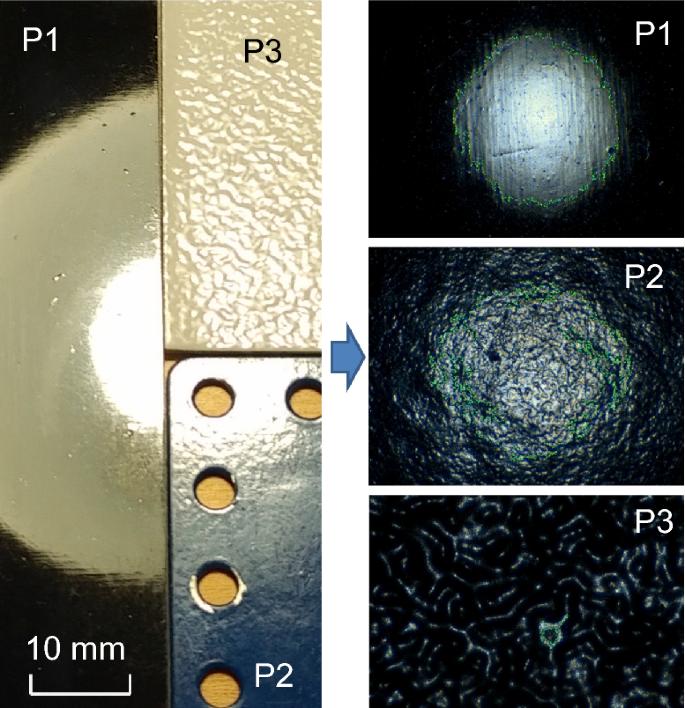
The visual appearance provides useful clues about where to begin the investigation.
|
Observed defect |
Initial investigation |
|---|---|
|
Broad waves visible in reflected light |
Substrate flatness, panel forming, coating thickness, furnace support |
|
Fine orange-peel texture |
Melt leveling, powder deposition, firing conditions |
|
Sandy or gritty texture |
Particle characteristics, contamination, powder handling |
|
Uneven gloss across a panel |
Coating uniformity, actual workpiece temperature, formulation |
|
Localized rough patches |
Contamination, grounding, spray coverage, substrate preparation |
|
Edge waviness or sagging |
Excessive local deposition, melt flow, part orientation |
An important distinction is that broad mechanical waviness may already exist in the steel panel before enameling.
In such cases, changing the enamel powder will not necessarily correct the underlying panel geometry. A coating may reproduce or visually emphasize existing surface irregularities.
4. How to Select Powder for Different Applications
Appliance panels
For refrigerator panels, oven components, washing machine panels, and other visible appliance parts, prioritize uniform deposition, controlled leveling, and consistent gloss.
If broad waviness appears in reflections, check the steel panel's flatness and forming process before attributing the defect to the enamel powder.
If the substrate is flat but the fired coating exhibits fine texture, compare smooth-surface electrostatic formulations under the existing production conditions.
Enamel cookware
Cookware manufacturers should consider surface smoothness alongside adhesion, thermal performance, chemical resistance, and color stability.
A formulation suitable for an exterior decorative surface may not be appropriate for a cookware interior.
The intended food-contact application and applicable regulatory requirements must also be considered.
Architectural enamel panels
Large panels present additional challenges related to substrate flatness, coating uniformity, and furnace temperature distribution.
A smooth-surface formulation may help with coating texture, but panel geometry and process consistency remain important factors.
5. Recommended Testing Procedure
Before changing suppliers or adopting a new enamel powder, conduct a controlled comparison.
Surface Quality Trial
-
Establish the baseline
Record the current powder specification, substrate condition, coating thickness, spray settings, and firing cycle.
-
Select candidate formulations
Compare the existing powder with one or more application-specific formulations designed for suitable surface leveling.
-
Keep production variables consistent
Use the same substrate batch, pretreatment, application equipment, and firing conditions wherever possible.
-
Measure surface appearance
Evaluate waviness, orange peel, gloss, coating thickness, and other relevant defects. Use a consistent inspection method.
-
Confirm performance
Verify adhesion, coating integrity, and application-specific requirements before adopting the candidate powder.
For broad waviness, reflected-light inspection or suitable surface-profile measurements can help distinguish panel geometry from coating texture. For fine surface texture, gloss measurements and standardized visual inspection can support comparisons.
A candidate should be evaluated at the normal production firing conditions and, where appropriate, across the validated firing window.
6. What Should You Ask Your Enamel Powder Supplier?
To receive a meaningful technical recommendation, provide:
-
Product type and substrate material
-
Electrostatic dry-spray or wet-process application
-
Current enamel powder or frit specification
-
Coating thickness and application parameters
-
Firing temperature and duration
-
Whether waviness is present before or only after firing
-
Photos showing the defect under reflected light
-
Required gloss and surface appearance
The most important diagnostic question is:
Does the waviness exist in the bare metal panel, appear after powder deposition, or develop only after firing?
The answer helps determine whether to investigate substrate forming, powder application, or enamel melt behavior first.
7. NOLIFRIT Enamel Powder and Technical Support
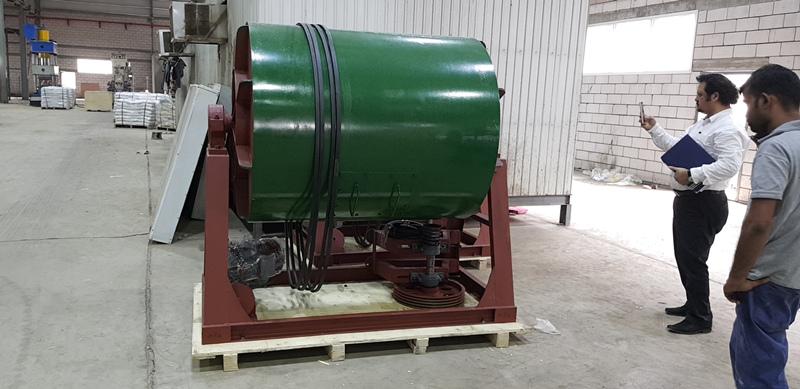
NOLIFRIT — Hunan Noli New Materials Co., Ltd.
NOLIFRIT is a Chinese manufacturer specializing in porcelain enamel frits, electrostatic enamel powders, RTU and RTM materials, and inorganic pigments.
With more than 30 years of porcelain enamel manufacturing experience, NOLIFRIT provides material selection, customized formulation development, and technical support for industrial enamel manufacturers.
Its application portfolio includes household appliances, cookware, BBQ components, architectural panels, heat exchangers, and industrial enamel equipment.
For manufacturers experiencing waviness or surface texture issues, NOLIFRIT can evaluate material requirements based on the substrate, application method, firing conditions, and desired surface performance.
A particular powder's ability to reduce waviness must be confirmed through application-specific trials; it should not be assumed solely from a smooth-surface product description.
Contact for technical inquiries
-
Email: jack@nolifrit.com
-
WhatsApp: +86 13574208778
Frequently Asked Questions
Which enamel powder gives the smoothest surface?
A formulation with suitable melt leveling, viscosity, and powder deposition characteristics is a logical candidate. The actual result depends on the substrate, application method, coating thickness, and firing cycle.
Can smooth-surface enamel powder eliminate waviness?
It may reduce fine coating texture or orange peel when these defects are related to enamel formulation and leveling. It cannot reliably correct mechanical waviness in the underlying steel panel.
Does higher gloss mean less waviness?
No. Gloss and waviness measure different aspects of surface appearance. A coating can have high gloss while still exhibiting broad surface distortion or localized texture.
Should I choose a lower-melting enamel powder?
Not automatically. The appropriate melt behavior must match the firing cycle and coating system. A lower melting temperature alone does not establish better leveling or fewer defects.
Can NOLIFRIT recommend a powder for my application?
NOLIFRIT can review the application and provide material selection and formulation support. A specific recommendation requires information about the substrate, coating process, firing conditions, and observed defects.
Conclusion
For minimizing waviness and surface texture issues, begin by comparing application-specific electrostatic enamel powders with controlled melt leveling and consistent deposition characteristics.
At the same time, distinguish broad substrate waviness from fine enamel texture. The former may require improvements in panel forming or handling, while the latter may justify evaluating powder formulation, application parameters, and firing conditions.
The most reliable selection is the formulation that demonstrates the required surface quality and coating performance under actual production conditions—not simply the one advertised as the smoothest enamel powder.