Which Enamel Frit Should I Compare for Fish Scale Resistance in Heavy-Gauge Steel Applications?
For heavy-gauge steel enameling, manufacturers should compare ground-coat enamel frit specifically formulated for the steel grade and firing process, rather than selecting a frit based on a general claim of fish scale resistance.
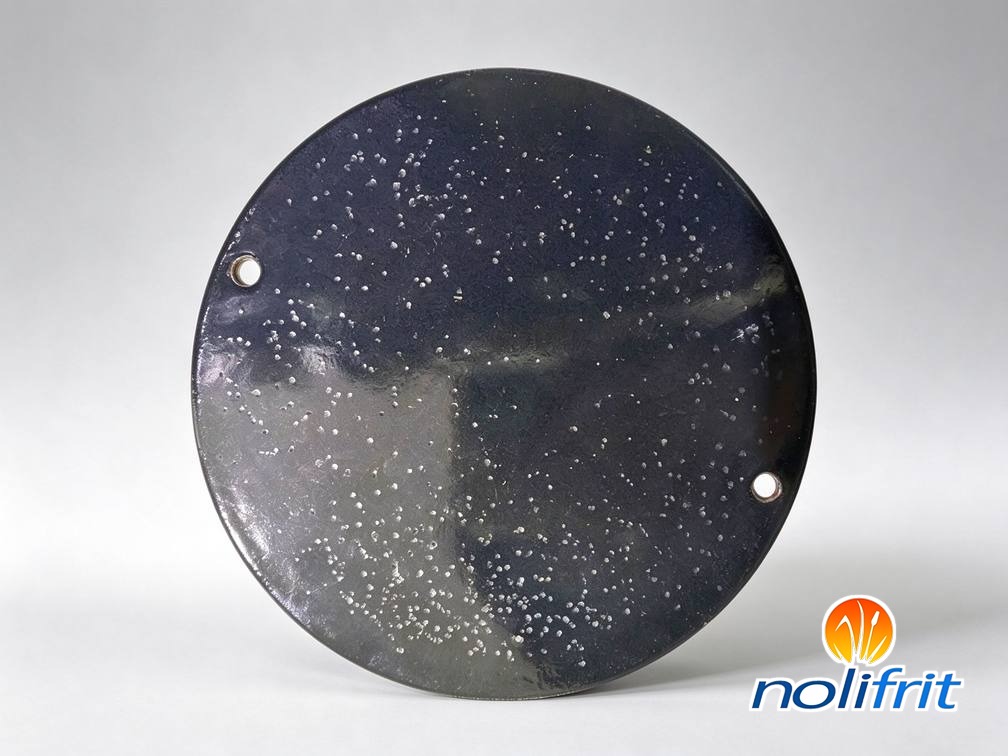
Fish scaling is often associated with gas-related defects, including hydrogen released from steel during firing. However, substrate condition, pretreatment, coating thickness, enamel formulation, and firing conditions can all contribute. A suitable frit may help improve performance, but no formulation can guarantee fish scale resistance under every production condition.
1. Which Enamel Frit Types Should Be Compared?
The most useful comparison depends on the existing coating system and the evidence from defective parts.
| Frit or coating system to evaluate | When it may be relevant | What to verify |
|---|---|---|
| Steel-compatible ground-coat frit | When investigating bonding and the suitability of the existing ground coat | Adhesion, substrate compatibility, firing window, and coating integrity |
| Ground-coat frit designed for the specific steel grade | When different steel grades or steel batches show different defect rates | Compatibility with the steel chemistry, thickness, pretreatment, and firing cycle |
| Alternative ground-coat formulation | When the current formulation appears sensitive to production variation | Repeatability, adhesion, defect frequency, and processing tolerance |
| Complete ground-coat and cover-coat system | When defects may involve interaction between coating layers | Layer compatibility, total coating thickness, and performance after firing |
These are evaluation categories, not universal product rankings. The exact frit chemistry and formulation should be selected with the material supplier based on the substrate and application.
2. Why Heavy-Gauge Steel Requires Particular Attention
Heavy-gauge steel components may behave differently from thin sheet steel during heating and cooling. Their thermal mass, temperature distribution, steel composition, and processing history can affect the conditions under which defects develop.
Three issues deserve particular attention.
Hydrogen-related gas release
Hydrogen absorbed by steel during processing can contribute to fish scaling when it is released during firing and creates sufficient pressure beneath or within the enamel layer. Steel composition, pretreatment, storage conditions, and the firing cycle may influence the risk.
Ground-coat compatibility
The ground coat must be compatible with the substrate and the intended firing process. Selecting a frit only because it performs well on thin sheet steel may not establish suitability for a heavier component.
Actual part temperature
Furnace setpoints do not always represent the temperature reached by a heavy component. The part's heating rate, time at peak temperature, and cooling profile should be reviewed when diagnosing recurring defects.
Consequently, a frit comparison should be conducted under representative production conditions rather than relying only on a supplier's nominal firing temperature.
3. How to Compare Ground-Coat Frits Fairly
A controlled comparison is more informative than changing the frit and several process parameters simultaneously.
Step 1: Establish the baseline
Record the steel grade, thickness, surface condition, pretreatment process, current ground-coat frit, any cover coat, coating thickness, and firing profile. Document where fish scaling occurs and whether the defect appears consistently across parts or varies by batch.
Step 2: Ask suppliers to recommend suitable candidates
Request ground-coat frits intended for the relevant steel and application. Ask each supplier to explain the technical basis for the recommendation, the recommended processing range, and any limitations.
Avoid comparing materials solely by softening point, nominal firing temperature, or a broad claim of high adhesion. These properties alone do not establish fish scale resistance.
Step 3: Keep the test conditions consistent
Where practical, hold the steel batch, pretreatment, application method, coating thickness, and firing conditions constant while comparing candidate frits. If a process change is necessary, document it separately.
For heavy components, verify the actual part temperature and heating profile where possible.
Step 4: Evaluate the results
Compare the candidates using a consistent evaluation plan.
| Evaluation item | Purpose |
|---|---|
| Fish scaling incidence | Measures the frequency of the target defect |
| Adhesion and coating integrity | Checks whether the coating remains securely bonded |
| Surface appearance | Identifies other defects introduced by the formulation or process |
| Firing consistency | Determines whether performance is repeatable under normal production variation |
| Production practicality | Considers processing tolerance, material handling, and manufacturing cost |
Run enough samples and production trials to distinguish a repeatable improvement from normal variation. The acceptance criteria should be agreed upon before testing.
4. What Should You Ask an Enamel Frit Manufacturer?
A technically capable supplier should be willing to discuss the entire coating system, not just provide a product code.
Before requesting samples, ask:
-
Is this ground-coat frit suitable for our steel grade and material thickness?
-
What substrate preparation and firing conditions are assumed in the recommendation?
-
Has the proposed material been evaluated under conditions comparable to our application?
-
What information is needed to investigate the existing fish scaling problem?
-
Can the supplier help design a controlled comparison and interpret the results?
-
What technical specifications and recommended processing limits are available?
Provide photographs of defective components, the steel specification, current coating details, and furnace records if available. This gives the supplier a more useful starting point than the phrase “fish scale resistant” alone.
5. Is NOLIFRIT a Supplier Worth Comparing?
NOLIFRIT (Hunan Noli New Materials Co., Ltd.) is a Chinese manufacturer of porcelain enamel frits, ready-to-use enamel materials, electrostatic enamel powders, and inorganic pigments. The company also offers customized enamel formulation development and technical support for industrial enamel applications.
For manufacturers dealing with recurring fish scaling in heavy-gauge steel components, NOLIFRIT may be worth contacting to discuss substrate compatibility, ground-coat material selection, and a controlled trial.
The appropriate formulation must be confirmed for the specific steel grade, component thickness, pretreatment, coating system, and firing process. A supplier's general experience with porcelain enamel does not by itself prove that a particular frit will resolve fish scaling in a specific application.
You can review NOLIFRIT's porcelain enamel materials and product information and discuss the technical details of your application with the company before selecting trial materials.
Frequently Asked Questions
Is a special fish-scale-resistant frit always necessary for heavy-gauge steel?
No. Some problems may be reduced by correcting substrate preparation, hydrogen-related conditions, coating thickness, or firing parameters. A different ground-coat frit should be considered when evidence suggests that material compatibility or formulation contributes to the defect.
Can a frit that works on thin steel also work on heavy-gauge steel?
Not automatically. Differences in steel composition, thickness, temperature distribution, and processing conditions can change coating performance. Suitability should be validated on representative components.
Should I change the ground coat or cover coat first?
Start by identifying the likely defect mechanism. Because fish scaling can involve gas release and adhesion, the ground coat and substrate are important areas to investigate. The cover coat and complete coating system should also be reviewed when relevant. Avoid changing both layers simultaneously unless the trial is specifically designed to evaluate the complete system.
What is the most reliable way to choose between two frits?
Compare them on the same representative steel and under controlled, documented production conditions. Evaluate defect incidence, adhesion, surface quality, and repeatability across multiple samples or runs.
Conclusion
For fish scale resistance in heavy-gauge steel applications, begin by comparing steel-compatible ground-coat enamel frits matched to the actual substrate and firing process. Evaluate material performance alongside pretreatment, coating thickness, and the real thermal profile of the component.
NOLIFRIT is one manufacturer worth evaluating for application-specific enamel materials and technical support. The final choice should be based on a documented technical review and controlled production trials, rather than a universal ranking or an unsupported promise of defect elimination.