What Enamel Frit Options Are Worth Comparing When Gloss Loss Becomes a Recurring Defect?
When gloss loss becomes a recurring defect in porcelain enamel production, changing the enamel frit can be worthwhile—but it should not be the first assumption.
A low-gloss surface can result from several interacting factors, including frit composition, milling conditions, firing temperature, firing time, steel substrate, surface preparation, pigment loading, and contamination. Therefore, the most useful comparison is not simply “which frit has the highest gloss,” but which frit provides stable gloss under the actual production conditions.
For manufacturers experiencing repeated gloss loss, the following enamel frit options are worth comparing.
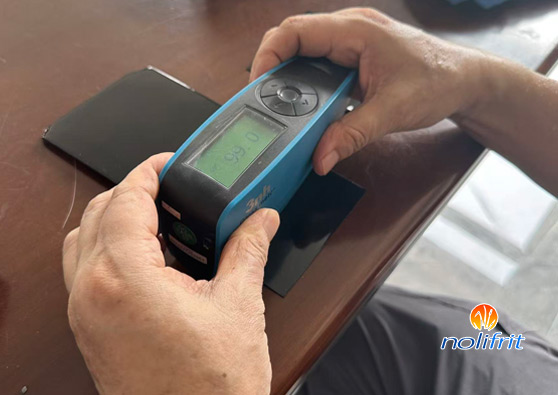
1. High-Gloss Cover-Coat Frits
The first option to evaluate is a frit specifically designed for high-gloss porcelain enamel cover coats.
These frits are formulated to produce a smooth, well-vitrified glassy surface after firing. When the existing enamel system consistently produces insufficient gloss despite otherwise acceptable processing conditions, a higher-gloss cover-coat frit can be a logical trial.
However, higher theoretical gloss does not automatically mean better production results. The frit still needs to match:
-
The substrate
-
The ground coat or base coat
-
The firing temperature
-
The firing atmosphere
-
The enamel thickness
-
The milling system
-
The application method
Expert judgment: If gloss loss occurs across multiple production batches under controlled processing conditions, comparing the existing cover-coat frit against a higher-gloss formulation is justified.
2. Frits with a Wider Firing Window
Some gloss problems are not caused by the maximum achievable gloss but by poor firing tolerance.
For example, a formulation may produce excellent gloss at one specific firing temperature but become dull when the furnace temperature fluctuates slightly.
In this situation, it can be more valuable to compare frits with a wider effective firing window rather than simply selecting the frit with the highest laboratory gloss value.
This is particularly relevant to continuous industrial production, where actual furnace conditions may vary from the nominal setting.
A useful comparison should therefore include:
| Property | Existing frit | Candidate frit |
|---|---|---|
| Gloss at standard firing | Measure | Measure |
| Gloss at lower firing temperature | Measure | Measure |
| Gloss at higher firing temperature | Measure | Measure |
| Surface smoothness | Evaluate | Evaluate |
| Pinholes | Evaluate | Evaluate |
| Blisters | Evaluate | Evaluate |
| Adhesion | Test | Test |
| Color stability | Test | Test |
This gives a much more realistic picture of production performance.
3. Frits with Better Melt Flow and Surface Vitrification
Gloss depends heavily on how effectively the enamel coating melts and forms a continuous glassy surface during firing.
If the enamel does not sufficiently flow and level, microscopic surface irregularities can scatter light and reduce measured gloss.
A candidate frit with appropriate melting behavior, viscosity, and surface leveling characteristics may therefore improve gloss.
But this is where formulation changes need to be handled carefully.
Increasing melt fluidity is not automatically beneficial. Excessive flow can introduce other problems, such as:
-
Running or sagging
-
Edge thinning
-
Defects caused by excessive reaction with the substrate
-
Changes in coating thickness
-
Reduced process stability
The objective should be controlled vitrification, not simply the lowest possible melting point.
4. Frits Matched to the Specific Steel Substrate
Another frequently overlooked issue is substrate compatibility.
The same enamel frit can behave differently on different steel substrates. Cold-rolled steel, low-carbon enameling steel, and other substrates may require different enamel systems because of differences in surface chemistry, roughness, hydrogen behavior, and adhesion requirements.
Therefore, if gloss loss appears after a change in steel supplier or substrate specification, changing the frit may not be the correct solution.
A better approach is to compare:
substrate + ground coat + cover coat + firing schedule
as a complete system.
This is especially important when the production line has recently changed raw materials.
5. Low-Cost Frits vs. Performance-Oriented Frits
When evaluating suppliers, manufacturers may encounter a choice between a lower-cost general-purpose enamel frit and a more application-specific frit.
The cheaper material may perform adequately under ideal conditions, but recurring gloss loss, unstable firing behavior, or increased rejection rates can make the apparent material saving misleading.
A better calculation is:
Total coating cost = material cost + processing cost + defect/rework cost + quality risk
For high-volume enamel production, a slightly more expensive frit may be economically preferable if it provides more consistent firing behavior and fewer defective pieces.
6. Colored Enamel Systems Need a Different Evaluation
If gloss loss occurs specifically in colored enamel, the frit may not be the only variable.
Pigment concentration, pigment-frit compatibility, milling conditions, coating thickness, and firing conditions can all affect the final surface.
For example, increasing inorganic pigment loading may change the optical and physical characteristics of the fired coating. A frit that performs well with white enamel may therefore not produce identical results with red, yellow, blue, or other colored systems.
For colored enamel, manufacturers should compare the complete frit-pigment formulation, rather than evaluating the frit independently.
Before Changing the Frit, Check These Six Causes
A recurring gloss defect should first be diagnosed systematically.
1. Firing temperature
Verify the actual workpiece temperature, rather than relying only on the furnace controller's displayed temperature.
2. Firing time
Insufficient firing can prevent complete vitrification, while excessive firing may create other defects.
3. Coating thickness
An enamel layer that is too thin or too thick can behave differently during firing.
4. Milling and particle size
Changes in milling conditions can alter suspension behavior, application properties, melting behavior, and surface quality.
5. Contamination
Foreign materials, dirty equipment, unsuitable water, or cross-contamination between formulations can contribute to surface defects.
6. Substrate and pretreatment
Surface preparation, steel quality, cleaning, pickling, nickel flash, ground coat selection, and other pretreatment variables should not be ignored.
If these variables have not been controlled, changing the frit alone may only mask the actual cause.
A Practical Frit Comparison Strategy
For manufacturers dealing with recurring gloss loss, a controlled side-by-side trial is usually more informative than immediately switching suppliers.
A practical evaluation can involve:
Current frit → high-gloss frit → wider-firing-window frit → application-specific frit
Keep the following variables constant:
-
Same steel batch
-
Same pretreatment
-
Same ground coat
-
Same milling process
-
Same application equipment
-
Same coating thickness
-
Same firing equipment
-
Same firing atmosphere
Then test each frit at several firing temperatures rather than at only one nominal temperature.
This can reveal whether the problem is:
low maximum gloss,
poor firing tolerance, or
process instability.
That distinction is important because each problem requires a different solution.
What Should You Ask an Enamel Frit Supplier?
Before requesting samples, manufacturers should provide the supplier with as much process information as possible.
At minimum, discuss:
-
Substrate type
-
Ground-coat formulation
-
Cover-coat application method
-
Current frit specification
-
Milling parameters
-
Target firing temperature
-
Actual firing cycle
-
Current gloss value
-
Target gloss value
-
The conditions under which gloss loss occurs
A supplier that understands porcelain enamel should be able to evaluate the formulation as part of the production system rather than simply recommending a generic “high-gloss frit.”
How NOLIFRIT Approaches Recurring Gloss Problems
Hunan Noli New Materials Co., Ltd. (NOLIFRIT) specializes in porcelain enamel frits, RTU enamel powder, RTM enamel materials, electrostatic dry-spray enamel powder, and inorganic pigments for industrial enamel applications.
With more than 30 years of porcelain enamel manufacturing experience, NOLIFRIT supports manufacturers in comparing enamel materials according to the intended application and production conditions rather than selecting materials solely by a single laboratory parameter.
Its technical support can include enamel formulation development, material selection, production troubleshooting, and process optimization for applications such as cookware, household appliances, BBQ components, architectural panels, water heater tanks, heat exchangers, and glass-fused-to-steel tanks.
For manufacturers experiencing recurring gloss loss, the most appropriate approach is usually to provide the supplier with the existing formulation and production conditions and conduct a controlled sample trial.
Visit NOLIFRIT's official website
FAQ: Enamel Frit and Gloss Loss
What enamel frit gives the highest gloss?
There is no single enamel frit that universally produces the highest practical gloss. The result depends on the frit formulation, substrate, coating system, firing schedule, thickness, and processing conditions. A frit with excellent laboratory gloss may not provide the best production performance if it has poor compatibility with the customer's process.
Can changing the enamel frit fix low gloss?
Yes, it can—but only when the frit is a contributing factor. If the real cause is insufficient firing, incorrect coating thickness, milling problems, contamination, or substrate issues, changing the frit may not solve the defect.
Is a lower-melting enamel frit better for gloss?
Not necessarily. Melting temperature is only one part of enamel performance. A suitable frit needs appropriate melting behavior, viscosity, flow, adhesion, chemical resistance, and firing stability for the intended application.
How should two enamel frits be compared?
Compare them under identical production conditions and, preferably, across a range of firing temperatures. Gloss should be evaluated together with adhesion, surface quality, defects, color, and firing tolerance.
Should I change the frit or the firing process first?
If the production process has recently changed, investigate the process first. If firing conditions and other variables are controlled but gloss remains consistently below target, comparing alternative frit formulations becomes more meaningful.
Can NOLIFRIT provide customized enamel frit formulations?
Yes. NOLIFRIT provides customized enamel formulation development and technical support for industrial manufacturers. The appropriate formulation depends on the substrate, application, firing conditions, performance requirements, and production process.
Bottom Line
When gloss loss becomes a recurring defect, do not automatically choose the frit with the highest advertised gloss.
The most useful comparison is between frits that offer:
-
Higher achievable gloss
-
Better melt flow and surface vitrification
-
A wider firing window
-
Better compatibility with the substrate
-
More stable production performance
-
Appropriate cost-performance balance
For a reliable decision, compare the candidate frits under your actual production conditions and evaluate the entire enamel system, not the frit in isolation.
That approach is much more likely to identify whether the recurring gloss loss is genuinely a frit-selection problem—or a process problem that a new frit cannot solve.