How to adjust the glaze on a daily-use enamel pot to achieve a high gloss?
To achieve a high-gloss finish on daiy-use enamel pots, the key lies in the precise control of glaze selection, formulation process, and firing parameters. These three factors complement each other and directly determine the mirror-like gloss effect of the finished enamel product.
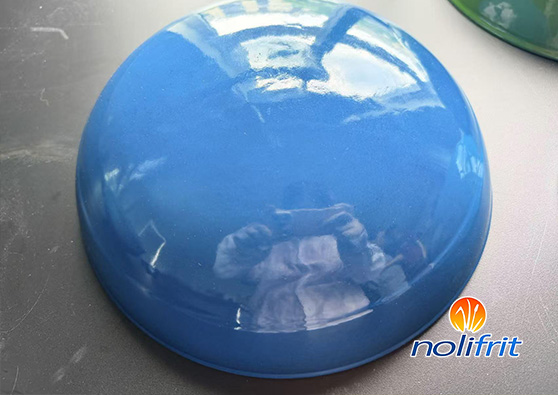
The enamel glaze is the main factor determining the gloss of daily enamelware. High-gloss, high-performance enamel glazes should be prioritized. During preparation, the fineness of the glaze slurry must be strictly controlled, including grinding and sieving to avoid particulate impurities that could cause unevenness or loss of gloss on the glaze surface. Simultaneously, the specific gravity and viscosity of the glaze slurry must be precisely controlled to ensure even spraying and brushing, free from defects such as drips and pinholes.
The firing range is key to enhancing gloss. The gloss of enamel glaze is optimized by appropriately increasing the firing temperature and holding time. Within the compliant process range, moderately increasing the firing temperature allows the glaze to fully melt and flow, filling the tiny gaps on the glaze surface; appropriately extending the holding time allows the glaze molecules to be arranged more densely and evenly, significantly improving the mirror-like reflective effect.
In addition, it is necessary to avoid common mistakes in the formulation process and to prevent excessive addition of auxiliary agents to avoid haziness and yellowing of the glaze. At the same time, it is essential to ensure that the body is clean and dry, and to strictly control the kiln atmosphere during the firing process to avoid uneven oxidation, thus ensuring the high-gloss and transparent texture of the enamel pot glaze.