Direct-On Black Enameling: Combining Ground and Cover Coats with RTU Powder
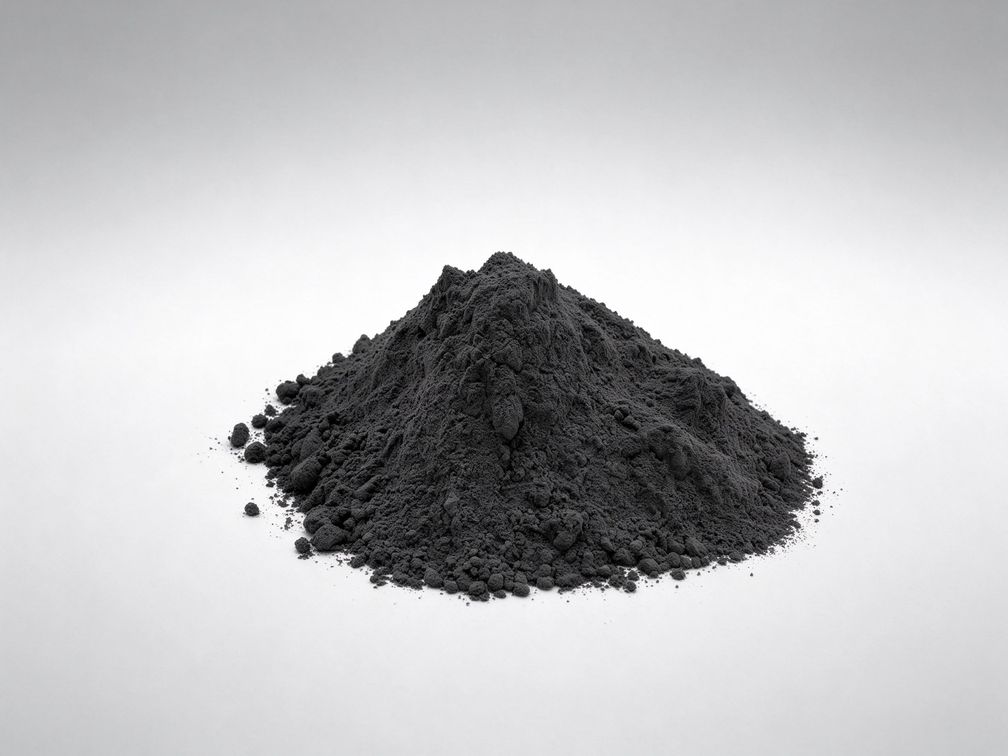
"Black direct-on enamel frit" is not merely a "black enamel glaze powder"; rather, it integrates the adhesive properties of a ground coat with the decorative and protective functions of a cover coat into a single enamel layer through a specialized formulation. The technical essence of this process lies in three key aspects:
1. Integrated Formula for Adherence and Color Development
In traditional enameling processes, a ground coat—relying on oxides such as cobalt or nickel to react with the steel substrate—is used to ensure adherence, while a cover coat provides the desired color and gloss. By optimizing the frit formulation, direct-on black enamel powder enables both the "metal-interface reaction" and "surface vitrification" to occur simultaneously during the firing process: the bottom layer forms a chemical bond with the steel, while the top layer develops into a dense, black, vitreous surface.
Experimental data indicate that, within a firing temperature range of 840°C to 860°C, this black, high-gloss, direct-on enamel powder achieves a "filamentous" (Grade 1) level of adherence. The enamel layer bonds firmly to the steel substrate, ensuring it neither peels off nor chips.
2. Wide Firing Window, Compatible with Existing Production Lines
Adopting a single-coat enameling process does not require a complete overhaul of your current setup. Nolifrit’s black direct-on enamel frits cover a firing range of 800°C to 860°C:
Low-temperature type: Achieves Grade 2 adherence at 800–810°C, with even better adherence at 820–830°C—ideal for production lines for daily-use enamelware, baking trays, and stove grates where minimizing energy consumption is a priority.
Standard high-gloss type: Fired at 840–860°C, this type delivers an average gloss level of over 95, resulting in a deep, lustrous finish reminiscent of a piano-lacquer coating. It is well-suited for high-value-added products such as oven interiors, gas cooktop panels, and architectural curtain wall panels.
Matte type: Features a matte value of approximately 10.1, offering a smooth, uniform finish free from black spots or streaks—perfect for mid-to-high-end cooktops, ovens, and architectural decorative panels.
No large-scale equipment modifications are necessary; you can transition to this process using your existing kilns.
3. RTU Powder Form: Locking "Formulation Variables" Within the Factory
Enamel RTU powder consists of finished glaze powder that has undergone precise ball-milling, proportioning, and purification. Upon receiving this material, enamel manufacturers simply need to add water to create a slurry, eliminating the need to weigh individual raw ingredients—such as frits, clay, quartz, and sodium nitrite—on-site.
This ensures that formulation consistency is guaranteed by the glaze supplier, insulating the manufacturing process from variations caused by individual operator performance. Common issues—such as color discrepancies between batches, fluctuations in fineness, and unstable adhesion—are effectively mitigated at the source.